

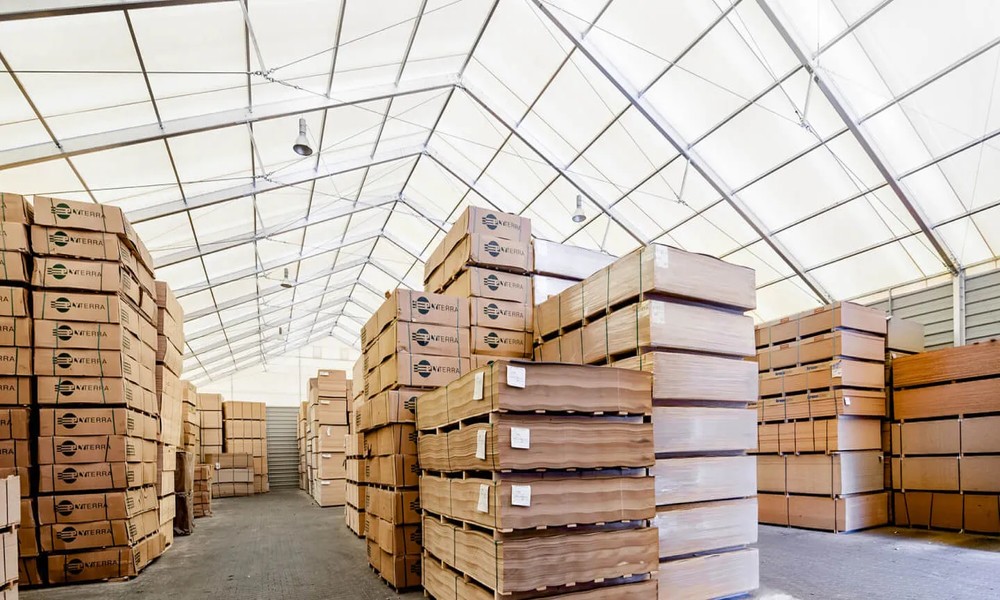
Every day, warehouses are in charge of handling, transporting, and storing substantial amounts of goods. The need for effective storage solutions is greater than ever as companies continue to expand. Bulk storage containers are among the most practical options employed in contemporary institutions. These containers help warehouses maintain order, boost output, and make the workplace safer for employees.
Businesses depend on well-organized storage systems to cut down on delays and enhance operations in anything from manufacturing facilities to retail distribution centers. It is difficult for employees to find objects quickly when they are dispersed or kept inefficiently. This may cause needless confusion, raise labor expenses, and hold down shipments. Warehouses may handle goods in a more organized and effective manner by using bulk storage containers.
Using Bulk Storage Containers To Improve Space Management
Making the most of available space is one of the most difficult tasks in warehouse management. Large inventories are often handled by warehouses, and disorganization may result in packed aisles and unused storage space. Businesses may make better use of vertical and floor space with well-designed storage containers.
In order to achieve a more compact storage plan, many warehouses securely stack containers. As a result, there is less clutter and greater freedom for employees to roam about. Sorting items according to classifications, sizes, or shipment dates is also made simpler by well-organized stacking systems.
Businesses may keep more products without expanding their facilities by making better use of available space. This may increase overall efficiency while lowering operating expenses.
Quicker Identification And Retrieval Of Inventory
In hectic warehouse settings, finding things fast is crucial. Packing and shipping processes may be slowed down by inventory location delays. Employee identification and retrieval of items are facilitated by well-organized storage systems.
Employees can better understand where things belong when containers are labeled. This improves workflow and lowers the possibility of lost goods. Even minor organizational changes may result in considerable time savings in huge warehouses that store thousands of goods every day.
Customer satisfaction is also increased by effective retrieval mechanisms. Products may be sent more precisely and swiftly when orders are processed more promptly.
Enhanced Safety At Work
Businesses that handle heavy equipment and commodities are very concerned about warehouse safety. Hazards include obstructed paths, unstable product heaps, and unintentional falls that may result from disorganized storage locations. These dangers may be decreased with the use of appropriate storage methods.
Bulk storage containers that are sturdy and long-lasting provide stable storage for products that may otherwise be piled dangerously. Employees can move and handle items more safely, which lowers the possibility of mishaps.
Additionally, visibility across the warehouse is enhanced by a clear arrangement. When aisles are kept open and storage spaces are set up correctly, workers may move equipment more safely. There are fewer workplace accidents and more employee confidence when the workplace is more organized and tidy.
Simpler Classification Of Products
Different kinds of goods are often kept in warehouses simultaneously. Inadequate organization may lead to confusion and delays when comparable objects are grouped together. Businesses may designate specific areas for certain inventory groupings with the aid of storage containers.
Products may be sorted by size, weight, material type, or delivery schedule, for instance, at warehouses. This well-organized approach enhances stock management and makes inventory monitoring easier. Workers spend more time doing crucial activities and less time looking for things.
Additionally, categorization lessens product degradation. Sensitive or fragile goods should be kept apart from larger objects that might shatter when stacked or moved.
Improved Assistance With Warehouse Automation
Automation technologies are being used more and more in modern warehouses to increase productivity. Inventory management systems, barcode scanners, and automated forklifts are currently used at many facilities. In order to enable these technologies, organized storage is essential.
Accurate operation of automated systems is facilitated by organized layouts and uniform container sizes. When storage spaces adhere to a defined design, workers and equipment can transfer goods more effectively.
Storage management becomes increasingly more crucial as companies continue to invest in warehouse technology. Reliable storage systems facilitate more efficient operations and assist businesses in adjusting to shifting market needs.
In Conclusion
To keep corporate operations running smoothly, warehouse organization is crucial. Faster workflows, greater inventory management, and increased worker safety are common outcomes for businesses that invest in structured storage solutions. Warehouses may optimize space, minimize clutter, and improve staff productivity by using bulk storage containers.
Organized storage solutions will continue to be crucial to effective warehouse management as companies expand and supply networks become more complex. Companies that put organization first now are better equipped to confidently face operational issues in the future.