

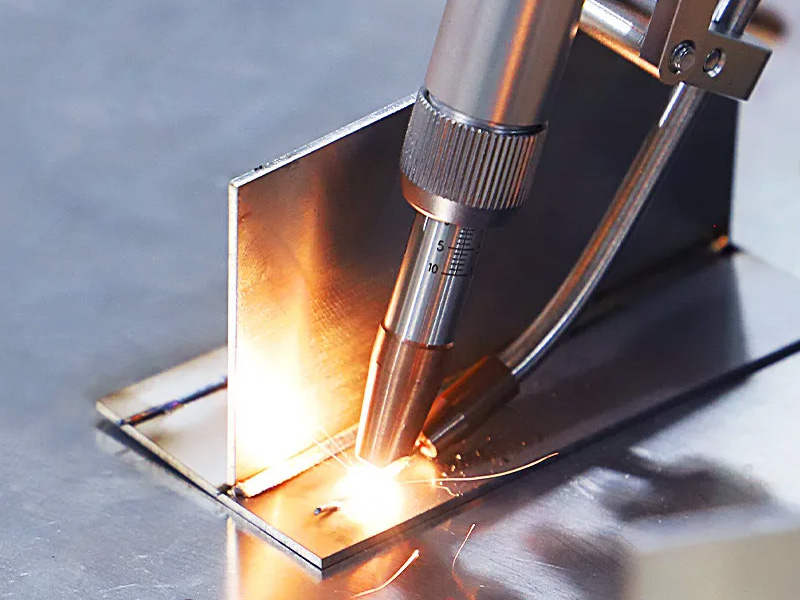
Precision welding has become a critical requirement across modern manufacturing, fabrication, and repair industries. As product designs grow more intricate and material tolerances tighten, traditional welding methods often struggle to deliver consistent accuracy. This is where a handheld laser welder stands out as a powerful and efficient solution. Designed for control, speed, and accuracy, this technology is transforming how professionals approach precision work.
Exceptional Accuracy And Control
One of the biggest advantages of using a handheld laser welder is the level of precision it offers. Unlike conventional welding tools that rely on heat spread and manual judgment, laser welding focuses energy on a very small, controlled area. This allows operators to create clean, narrow weld seams with minimal deviation.
For precision applications such as thin metal sheets, fine joints, or detailed components, this control reduces the risk of burn-through or misalignment. The handheld design also gives operators direct visibility of the weld area, making it easier to guide the weld exactly where it is needed.
Minimal Heat Affected Zone
Traditional welding techniques often generate excessive heat, which can distort surrounding material and weaken structural integrity. A handheld laser welder produces a concentrated heat source, resulting in a much smaller heat-affected zone.
This minimal heat exposure is especially beneficial when working with delicate or high-value materials. It helps maintain the original properties of the metal, prevents warping, and reduces the likelihood of cracks or deformation. For industries that demand dimensional accuracy, such as electronics, automotive, and medical equipment manufacturing, this benefit is critical.
Cleaner Welds With Reduced Post-Processing
Precision work often requires a flawless finish, and excessive spatter or rough seams can increase labor time and costs. Handheld laser welders create smooth, aesthetically pleasing welds with very little spatter.
Because the welds are clean and consistent, there is significantly less need for grinding, polishing, or rework. This not only improves efficiency but also preserves material thickness and surface quality. The ability to achieve near-finished welds straight from the process is a major advantage in high-precision projects.
Faster Welding Speed And Higher Productivity
Speed and precision are rarely combined in traditional welding, but laser technology bridges that gap. A handheld laser welder operates at much higher speeds than TIG or MIG welding while maintaining accuracy.
This increased speed allows operators to complete precision tasks more efficiently without sacrificing quality. For workshops handling repetitive or detailed welds, this can dramatically improve output and reduce project turnaround times. Faster welding also means less overall heat input, further protecting the workpiece.
Versatility Across Materials And Applications
Precision work often involves a variety of materials, and not all welding tools handle them equally well. Because of their great versatility, handheld laser welders can be used on a variety of metals that are frequently used in precision production, including copper alloys, aluminum, carbon steel, and stainless steel.
Because of their versatility, they can be used for everything from beautiful metalwork to sophisticated mechanical components. Operators can adjust parameters such as power and pulse settings to match material thickness and joint type, ensuring consistent results across different projects.
User-Friendly Operation And Reduced Skill Barrier
While traditional precision welding can require years of experience to master, handheld laser welders are designed to be more intuitive. Many systems include preset modes, clear controls, and stable output, allowing operators to achieve professional results with less training.
This lower skill barrier is particularly valuable for businesses aiming to expand their precision welding capabilities without extensive labor costs. It also improves consistency, as results depend less on individual technique and more on controlled laser parameters.
Improved Workplace Safety
Precision welding environments benefit from improved safety conditions when using a handheld laser welder. The controlled heat input reduces sparks, fumes, and spatter compared to conventional methods. As a result, operators work in a safer and cleaner environment.
Furthermore, safety features like sensors, regulated beam emission, and protective enclosures are frequently included in contemporary handheld laser welding systems. These measures help reduce risks while maintaining the precision required for detailed work.
Cost Efficiency Over Time
Although the initial investment in a handheld laser welder may be higher than traditional equipment, the long-term cost benefits are significant. Reduced material waste, minimal rework, faster production times, and lower labor demands all contribute to improved cost efficiency.
For businesses focused on precision work, these savings can quickly offset the upfront expense. The ability to deliver consistent, high-quality welds also enhances customer satisfaction and reduces quality-related losses.
Conclusion
There are many more advantages to using a handheld laser welder for precision work than just increased accuracy. From minimal heat distortion and cleaner welds to faster production and material versatility, this technology offers a modern solution to the growing demands of precision fabrication. As industries continue to prioritize quality, efficiency, and reliability, handheld laser welding is becoming an essential tool for professionals who require precision without compromise.